Qingming Festival (清明节): remembering ancestors in spring
Qingming, often called Tomb-Sweeping Day, falls on 4 or 5 April each year: Monday 5 April in 2027. It is the most important time of year for Chinese families to visit their ancestors' graves and columbarium niches, tidy them and make offerings. This guide explains when it falls, where it comes from, what families do at the grave, what to bring, and what to know for Chinese families.
When is Qingming?
Unlike most Chinese festivals, Qingming does not follow the lunar calendar. It is one of the 24 solar terms (节气), which follow the sun, so it always falls on 4 or 5 April. Its lunar date changes each year, and that is the date written on a parcel seal.
| Year | Date | Lunar date |
|---|---|---|
| 2026 | Sunday 5 April | 丙午年二月十八 |
| 2027 | Monday 5 April | 丁未年二月廿九 |
| 2028 | Tuesday 4 April | 戊申年三月初十 |
Qingming is a public holiday in Hong Kong, Macau, Taiwan and mainland China, but not in Singapore or Malaysia. In 2027 Easter comes the week before (Good Friday is 26 March), so Hong Kong families have two long weekends close together.
Which days can you visit?
Families do not have to visit on the day itself. Many go on a weekend in the weeks around it, and a common rule is to visit within about ten days before or after Qingming. Some families prefer to go before the day rather than after it; ask your elders what your family does.
Where Qingming comes from
清明 means "clear and bright", the weather of mid-spring. The festival grew out of the older Cold Food Festival (寒食节), held a day or two before it, when no fires were lit and only cold food was eaten.
The Cold Food Festival is linked to the story of Jie Zitui (介子推), a loyal follower of Duke Wen of Jin (晋文公). During the duke's years in exile, Jie is said to have cut flesh from his own thigh to feed him. When the duke came to power, Jie refused any reward and withdrew to the mountains with his mother. The duke set fire to the forest to drive him out, but Jie died in the fire rather than leave. In grief, the duke ordered that no fires be lit on that day.
By the Tang dynasty, visiting the graves at Cold Food had become an official custom, and over time it merged into Qingming. Today Qingming is the main day for remembering ancestors, while also being a spring festival of outings in the fresh green countryside (踏青).
What families do at the grave
The order varies from family to family, but a visit usually goes like this.
1. Sweep and tidy 扫墓
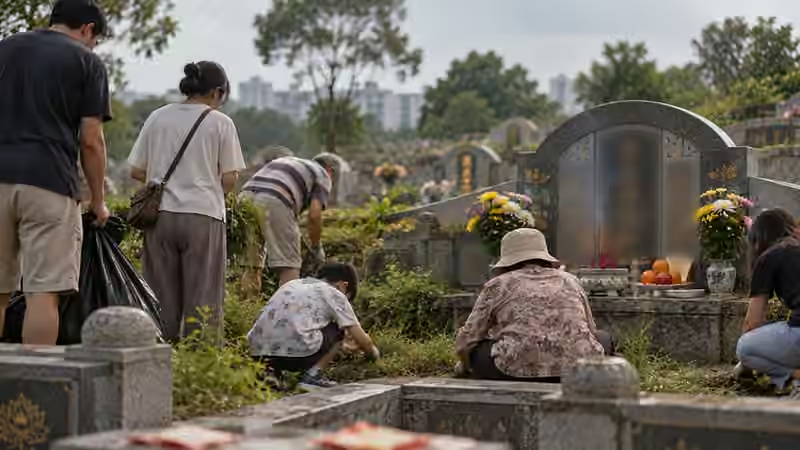
The family clears weeds and fallen leaves, sweeps the grave, wipes the headstone, and may repaint the faded characters of the inscription. At a columbarium, this means wiping the niche and its plaque and replacing old flowers.
2. Honour the Earth God first 土地公 · 后土
Many graves have a small stone beside them for the Earth God, who guards the grave. Families often make a small offering and light incense there first, before the ancestors. Some also set aside a little for wandering spirits who have no family to visit them.
3. Set out offerings and pay respects 祭拜
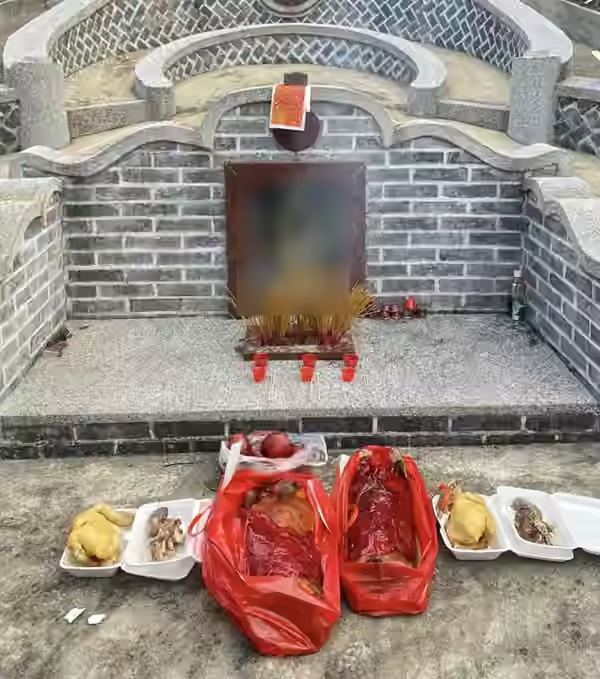
Food, fruit, tea or wine, and flowers are laid out before the grave. Candles and joss sticks are lit, and each family member in turn holds the joss sticks, bows (some kneel) and places them in the burner, usually starting with the eldest. Many speak quietly to their ancestors, telling them family news.
4. Burn joss paper and parcels 烧纸钱 · 化包袱
Gold and silver joss paper, paper money and paper parcels (包袱, bao fu) are burned for the ancestors to use in the afterlife. Burn them only in the burner provided.
5. Leave paper on the grave 压纸
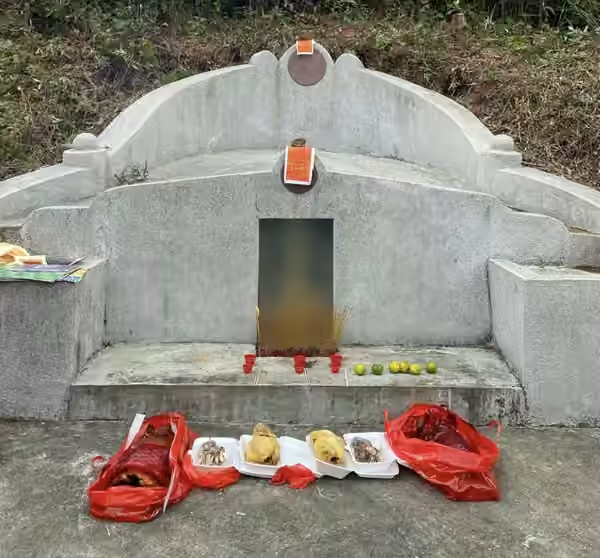
Before leaving, many families weigh down sheets of paper on top of the grave, a sign that it has been tended. Hokkien families often use colourful grave paper (墓纸); Cantonese families often use red or yellow paper.
6. Take the food home
The food is usually not left behind. Families take it home and share it, as eating what has been offered is believed to bring the ancestors' blessing.
Other Qingming customs
In different places people fly kites, wear or hang willow sprigs (插柳) to keep bad luck away, and eat seasonal foods: green rice cakes (青团) in the Jiangnan region, and popiah (润饼) among many Hokkien families.
What to bring
- incense, a pair of red candles, and gold and silver joss paper;
- paper parcels or other paper offerings, if your family burns them;
- fruit such as oranges or apples, and the food your loved one enjoyed; roast pork and chicken are common at graves;
- tea or wine, poured in three small cups;
- fresh flowers;
- a cloth, gloves, a small broom or shears, and a bag to take rubbish away;
- water, a hat and an umbrella, as the weather can be hot or wet.
At many Buddhist columbaria and temples, only vegetarian offerings are allowed. Check before you bring meat.
Qingming in Singapore
Most families in Singapore visit a columbarium niche, as most old cemeteries have been cleared and cremation is now the norm. Choa Chu Kang Cemetery, and the government columbaria at Mandai, Choa Chu Kang and Yishun, see very large crowds on the weekends around Qingming.
- Go on a weekday or early in the morning if you can, as the weekends before Qingming are the busiest.
- In past years, the National Environment Agency (NEA) has asked drivers to book an e-appointment for some sites at peak times and run free shuttle buses from nearby MRT stations. Check NEA's advisory nearer the time, as each year's arrangements are announced shortly before.
- Burn joss paper only in the burners provided, and clear away your offerings and rubbish when you leave.
- Columbaria usually do not allow eating inside the halls or bringing pets.
Qingming in Hong Kong
Families climb to hillside graves and visit public and private columbaria across the territory. The Transport Department makes special transport arrangements for the main cemeteries over the weekends around Qingming, and some roads close. Public transport is strongly advised.
Hill fires are a real risk at grave-sweeping time. Burn offerings only in the burners provided, never leave anything smouldering, and consider bringing flowers instead of burning on the hillside. Check what each cemetery or columbarium allows before you go.
Writing the parcel seal for Qingming
If you burn a paper parcel (包袱, bao fu), it carries a yellow seal with three columns: who it is for, the occasion and who sends it. The middle column for Qingming reads:
清明节追远 冥中宝用
("remembering at Qingming, for treasured use in the netherworld"). The date beneath the senders is the lunar date of the day you burn the parcel; for Qingming 2027 itself, it is 丁未年二月廿九. For the other two columns, the titles for parents and grandparents, and worked examples, see How to write a Qingming parcel seal.
Quick answers
When is Qingming Festival in 2027?
Qingming falls on Monday 5 April 2027 (丁未年二月廿九). It is one of the 24 solar terms, so it always falls on 4 or 5 April: it was Sunday 5 April in 2026, and is Tuesday 4 April in 2028. It is a public holiday in Hong Kong, Macau, Taiwan and mainland China, but not in Singapore or Malaysia.
Do you have to visit the grave on the day of Qingming?
No. Many families go on a weekend in the weeks around it, and a common rule is to visit within about ten days before or after Qingming. Some families prefer to go before the day rather than after it.
What are the steps of a Qingming grave visit?
Families sweep and tidy the grave or niche, often make a small offering to the Earth God (土地公) first, then set out food, fruit, tea or wine and flowers, light candles and joss sticks, and bow in order of seniority. They burn joss paper and parcels in the burner, weigh down paper on the grave, and take the food home to share.
What should I bring for Qingming?
Incense, a pair of red candles, gold and silver joss paper, fruit and the food your loved one enjoyed, tea or wine in three small cups, fresh flowers, and a cloth, gloves and a small broom to tidy the grave. Many Buddhist columbaria allow only vegetarian offerings.
Can I make a Qingming offering if I cannot visit the grave?
Yes. At Nirvana Hall of Remembrance you can send a parcel (包袱, bao fu) online. The seal is written for you with the Qingming line, the correct title and the lunar date, and the offering appears on your loved one's memorial page for the family to see.
Can't be at the grave this Qingming?
Many families are spread across countries and cannot all be home for Qingming. At Nirvana Hall you can send a parcel online: choose your offerings, add your name and relationship, and the seal is written for you with the Qingming line, the correct title and the lunar date. Your offering then appears on your loved one's memorial page for the whole family to see.
Visit Nirvana HallAlso read: How to write a Qingming parcel (包袱) seal · Chung Yeung Festival: remembering ancestors in autumn · The days after a death: 头七, 七七, 百日 and 对年
清明节:春天里的追思
清明节每年在4月4日或5日,2027年为4月5日(星期一)。这是华人家庭一年中祭扫祖先坟墓与骨灰龛最重要的时节。本指南介绍清明节的日期、由来、扫墓的步骤、要带什么,以及华人家庭需要知道的事。
清明节是哪一天?
与大多数华人节日不同,清明不按农历计算。它是二十四节气之一,跟随太阳运行,所以总在公历4月4日或5日。它的农历日期每年不同,包袱封条上写的就是农历日期。
| 年份 | 公历日期 | 农历 |
|---|---|---|
| 2026 | 4月5日(星期日) | 丙午年二月十八 |
| 2027 | 4月5日(星期一) | 丁未年二月廿九 |
| 2028 | 4月4日(星期二) | 戊申年三月初十 |
清明节是香港、澳门、台湾和中国大陆的公众假期,但在新加坡和马来西亚不是。2027年复活节在清明前一周(耶稣受难节为3月26日),所以香港人有两个相近的长周末。
哪些日子可以扫墓?
扫墓不一定要在清明当天。许多家庭选在前后几周的周末前往,常见的说法是在清明前后约十天内扫墓。有些家庭习惯在清明之前、而不在之后前往;请问问家中长辈的做法。
清明节的由来
“清明”指春天天清气明的时节。清明节源自更古老的寒食节;寒食节在清明前一两天,这天禁止生火,只吃冷食。
寒食节与介子推的故事相连。介子推是晋文公的忠臣,相传晋文公流亡期间,他曾割下自己腿上的肉给晋文公充饥。晋文公回国即位后,介子推不求封赏,与母亲隐居山中。晋文公放火烧山,想逼他出来,介子推却宁死不出,葬身火中。晋文公悲痛不已,下令这一天禁火寒食。
到了唐代,寒食扫墓已成为官方习俗,后来渐渐与清明合而为一。今天的清明节,既是追思先人的日子,也是到郊外踏青的春日节令。
扫墓的步骤
各家做法不同,但扫墓一般是这样进行的。
一、清扫坟墓
家人拔除杂草、扫去落叶,擦拭墓碑,有时还会为褪色的碑文重新描字。在骨灰堂拜祭时,则是擦拭龛位与碑牌,换上新鲜的花。
二、先拜土地公
许多坟墓旁有一块小石碑,供奉守护坟墓的土地公(后土)。家人通常先在这里上香、献上少许供品,然后才祭拜祖先。有些家庭也会准备一点供品,给无人祭拜的孤魂。
三、摆供品,行礼
在墓前摆上饭菜、水果、茶酒与鲜花,点燃蜡烛与清香。家人依长幼次序持香行礼(有的跪拜),再把香插进香炉。许多人会轻声向先人诉说家中近况。
四、烧纸钱、化包袱
焚化金银纸、冥钞与纸包袱,供先人在另一个世界使用。请只在指定的化宝炉焚烧。
五、压纸
离开前,许多家庭会在坟上压几张纸,表示坟墓已有子孙前来打理。福建籍家庭常用彩色的墓纸,广府籍家庭则常用红纸或黄纸。
六、把食物带回家
供品食物一般不留在墓地,而是带回家与家人分享;人们相信吃了祭拜过的食物,能得到祖先的庇佑。
其他清明习俗
各地还有放风筝、插柳或戴柳以辟邪的习俗,也有应节食品:江南一带吃青团,许多福建籍家庭则吃润饼(薄饼)。
扫墓带什么
- 香、一对红烛,以及金银纸钱;
- 如果家中有烧包袱的习惯,带上纸包袱或其他纸扎供品;
- 橘子、苹果等水果,以及先人生前爱吃的食物;墓前常见烧肉和鸡;
- 茶或酒,倒在三个小杯中;
- 鲜花;
- 抹布、手套、小扫帚或剪刀,以及装垃圾的袋子;
- 饮用水、帽子和雨伞,因为天气可能炎热,也可能下雨。
许多佛教骨灰堂和寺庙只允许素食供品。带荤食前请先确认。
在新加坡过清明
在新加坡,大多数家庭是到骨灰堂祭拜,因为大多数旧坟场已经迁移,火化也已成为常态。蔡厝港坟场,以及万礼、蔡厝港和义顺的政府骨灰堂,在清明前后的周末人潮汹涌。
- 尽量在平日或清晨前往,清明前的几个周末最为拥挤。
- 往年,国家环境局(NEA)曾要求驾车人士在高峰期为部分地点预约,也安排了从附近地铁站出发的免费接驳巴士。每年的安排在临近清明时才公布,请届时查阅国家环境局的通告。
- 请只在指定的焚化炉焚烧纸钱,离开时把供品和垃圾带走。
- 骨灰堂内一般禁止饮食,也禁止携带宠物。
在香港过清明
家人会上山拜祭山坟,也会前往各区的公营和私营骨灰龛场。运输署会在清明前后的周末为主要坟场作特别交通安排,部分道路会封闭,建议乘搭公共交通工具。
扫墓期间山火风险很高。请只在指定的化宝炉焚烧供品,离开前确保火种完全熄灭,也可考虑以鲜花代替在山上焚烧。出发前请先了解各坟场或骨灰龛场的规定。
清明包袱封条怎么写
如果您焚化纸包袱,包袱上会贴一张黄色封条,分三栏:收件的亲人、缘由与敬献者。清明的中栏写:
清明节追远 冥中宝用
封条下方的日期,写焚化当天的农历日期;2027年清明当天为“丁未年二月廿九”。其余两栏的写法、父母与祖父母的称谓及书写范例,请参阅清明包袱封条怎么写。
常见问题
2027年清明节是哪一天?
2027年清明节为4月5日(星期一),农历丁未年二月廿九。清明是二十四节气之一,所以总在公历4月4日或5日:2026年为4月5日(星期日),2028年为4月4日(星期二)。清明节是香港、澳门、台湾和中国大陆的公众假期,但在新加坡和马来西亚不是。
一定要在清明当天扫墓吗?
不一定。许多家庭选在前后几周的周末前往,常见的说法是在清明前后约十天内扫墓。有些家庭习惯在清明之前、而不在之后前往。
清明扫墓有哪些步骤?
家人先清扫坟墓或骨灰龛,通常先拜土地公,再摆上饭菜、水果、茶酒与鲜花,点燃蜡烛与清香,依长幼次序行礼。然后在化宝炉焚化纸钱与包袱,在坟上压纸,最后把食物带回家分享。
清明扫墓要带什么?
香、一对红烛、金银纸钱、水果与先人生前爱吃的食物、倒在三个小杯中的茶或酒、鲜花,以及打理坟墓用的抹布、手套和小扫帚。许多佛教骨灰堂只允许素食供品。
无法亲自扫墓,可以在清明敬献供品吗?
可以。在涅槃追思堂,您可以在网上寄出包袱,系统会为您写好封条,包括清明的中栏、正确的称谓与农历日期;供品会显示在亲人的纪念页上,供家人观看。
今年清明无法亲自扫墓?
许多家庭的成员分散各国,未必都能在清明回乡。在涅槃追思堂,您可以在网上寄出包袱:选择供品,填上您的姓名与关系,系统便会为您写好封条,包括清明的中栏、正确的称谓与农历日期。供品随后会显示在亲人的纪念页上,供家人观看。
进入涅槃追思堂延伸阅读:清明包袱封条怎么写 · 重阳节:秋天里的追思 · 离世之后的日子:头七、七七、百日与对年
清明節:春天裏的追思
清明節每年在4月4日或5日,2027年為4月5日(星期一)。這是華人家庭一年中祭掃祖先墳墓與骨灰龕最重要的時節。本指南介紹清明節的日期、由來、掃墓的步驟、要帶甚麼,以及華人家庭需要知道的事。
清明節是哪一天?
與大多數華人節日不同,清明不按農曆計算。它是二十四節氣之一,跟隨太陽運行,所以總在西曆4月4日或5日。它的農曆日期每年不同,包袱封條上寫的就是農曆日期。
| 年份 | 西曆日期 | 農曆 |
|---|---|---|
| 2026 | 4月5日(星期日) | 丙午年二月十八 |
| 2027 | 4月5日(星期一) | 丁未年二月廿九 |
| 2028 | 4月4日(星期二) | 戊申年三月初十 |
清明節是香港、澳門、台灣和內地的公眾假期,但在新加坡和馬來西亞不是。2027年復活節在清明前一週(耶穌受難節為3月26日),所以香港人有兩個相近的長週末。
哪些日子可以掃墓?
掃墓不一定要在清明當天。許多家庭選在前後幾週的週末前往,常見的説法是在清明前後約十天內掃墓。有些家庭習慣在清明之前、而不在之後前往;請問問家中長輩的做法。
清明節的由來
「清明」指春天天清氣明的時節。清明節源自更古老的寒食節;寒食節在清明前一兩天,這天禁止生火,只吃冷食。
寒食節與介子推的故事相連。介子推是晉文公的忠臣,相傳晉文公流亡期間,他曾割下自己腿上的肉給晉文公充飢。晉文公回國即位後,介子推不求封賞,與母親隱居山中。晉文公放火燒山,想逼他出來,介子推卻寧死不出,葬身火中。晉文公悲痛不已,下令這一天禁火寒食。
到了唐代,寒食掃墓已成為官方習俗,後來漸漸與清明合而為一。今天的清明節,既是追思先人的日子,也是到郊外踏青的春日節令。
掃墓的步驟
各家做法不同,但掃墓一般是這樣進行的。
一、清掃墳墓
家人拔除雜草、掃去落葉,擦拭墓碑,有時還會為褪色的碑文重新描字。在骨灰龕拜祭時,則是擦拭龕位與碑牌,換上新鮮的花。
二、先拜土地公
許多墳墓旁有一塊小石碑,供奉守護墳墓的土地公(后土)。家人通常先在這裏上香、獻上少許供品,然後才祭拜祖先。有些家庭也會準備一點供品,給無人祭拜的孤魂。
三、擺供品,行禮
在墓前擺上飯菜、水果、茶酒與鮮花,點燃蠟燭與清香。家人依長幼次序持香行禮(有的跪拜),再把香插進香爐。許多人會輕聲向先人訴説家中近況。
四、燒紙錢、化包袱
焚化金銀衣紙、冥鈔與紙包袱,供先人在另一個世界使用。請只在指定的化寶爐焚燒。
五、壓紙
離開前,許多家庭會在墳上壓幾張紙,表示墳墓已有子孫前來打理。福建籍家庭常用彩色的墓紙,廣府籍家庭則常用紅紙或黃紙。
六、把食物帶回家
供品食物一般不留在墓地,而是帶回家與家人分享;人們相信吃了祭拜過的食物,能得到祖先的庇佑。
其他清明習俗
各地還有放風箏、插柳或戴柳以辟邪的習俗,也有應節食品:江南一帶吃青團,許多福建籍家庭則吃潤餅(薄餅)。
掃墓帶甚麼
- 香、一對紅燭,以及金銀衣紙;
- 如果家中有燒包袱的習慣,帶上紙包袱或其他紙紮供品;
- 柑、蘋果等水果,以及先人生前愛吃的食物;墓前常見燒肉和雞;
- 茶或酒,倒在三個小杯中;
- 鮮花;
- 抹布、手套、小掃帚或剪刀,以及裝垃圾的袋子;
- 飲用水、帽子和雨傘,因為天氣可能炎熱,也可能下雨。
許多佛教骨灰龕和寺廟只允許素食供品。帶葷食前請先確認。
在新加坡過清明
在新加坡,大多數家庭是到骨灰龕祭拜,因為大多數舊墳場已經遷移,火化也已成為常態。蔡厝港墳場,以及萬禮、蔡厝港和義順的政府骨灰龕,在清明前後的週末人潮洶湧。
- 儘量在平日或清晨前往,清明前的幾個週末最為擁擠。
- 往年,國家環境局(NEA)曾要求駕車人士在高峯期為部分地點預約,也安排了從附近地鐵站出發的免費接駁巴士。每年的安排在臨近清明時才公佈,請屆時查閲國家環境局的通告。
- 請只在指定的焚化爐焚燒紙錢,離開時把供品和垃圾帶走。
- 骨灰龕內一般禁止飲食,也禁止攜帶寵物。
在香港過清明
家人會上山拜祭山墳,也會前往各區的公營和私營骨灰龕場。運輸署會在清明前後的週末為主要墳場作特別交通安排,部分道路會封閉,建議乘搭公共交通工具。
掃墓期間山火風險很高。請只在指定的化寶爐焚燒供品,離開前確保火種完全熄滅,也可考慮以鮮花代替在山上焚燒。出發前請先了解各墳場或骨灰龕場的規定。
清明包袱封條怎樣寫
如你焚化紙紮包袱,包袱上會貼一張黃色封條,分三欄:收件的親人、緣由與敬獻者。清明的中欄寫:
清明節追遠 冥中寶用
封條下方的日期,寫焚化當天的農曆日期;2027年清明當天為「丁未年二月廿九」。其餘兩欄的寫法、父母與祖父母的稱謂及書寫範例,請參閲清明包袱封條怎樣寫。
常見問題
2027年清明節是哪一天?
2027年清明節為4月5日(星期一),農曆丁未年二月廿九。清明是二十四節氣之一,所以總在西曆4月4日或5日:2026年為4月5日(星期日),2028年為4月4日(星期二)。清明節是香港、澳門、台灣和內地的公眾假期,但在新加坡和馬來西亞不是。
一定要在清明當天掃墓嗎?
不一定。許多家庭選在前後幾週的週末前往,常見的説法是在清明前後約十天內掃墓。有些家庭習慣在清明之前、而不在之後前往。
清明掃墓有哪些步驟?
家人先清掃墳墓或骨灰龕,通常先拜土地公,再擺上飯菜、水果、茶酒與鮮花,點燃蠟燭與清香,依長幼次序行禮。然後在化寶爐焚化紙錢與包袱,在墳上壓紙,最後把食物帶回家分享。
清明掃墓要帶甚麼?
香、一對紅燭、金銀衣紙、水果與先人生前愛吃的食物、倒在三個小杯中的茶或酒、鮮花,以及打理墳墓用的抹布、手套和小掃帚。許多佛教骨灰龕只允許素食供品。
無法親自掃墓,可以在清明敬獻供品嗎?
可以。在涅槃追思堂,你可以在網上寄出包袱,系統會為你寫好封條,包括清明的中欄、正確的稱謂與農曆日期;供品會顯示在親人的紀念頁上,讓家人一同看到。
今年清明無法親自掃墓?
許多家庭的成員分散各國,未必都能在清明回鄉。在涅槃追思堂,你可以在網上寄出包袱:選擇供品,填上你的姓名與關係,系統便會為你寫好封條,包括清明的中欄、正確的稱謂與農曆日期。供品隨後會顯示在親人的紀念頁上,讓家人一同看到。
進入涅槃追思堂延伸閲讀:清明包袱封條怎樣寫 · 重陽節:秋天裏的追思 · 離世之後的日子:頭七、七七、百日與對年